Category: book reviews

Review: The Six Deaths of the Saint

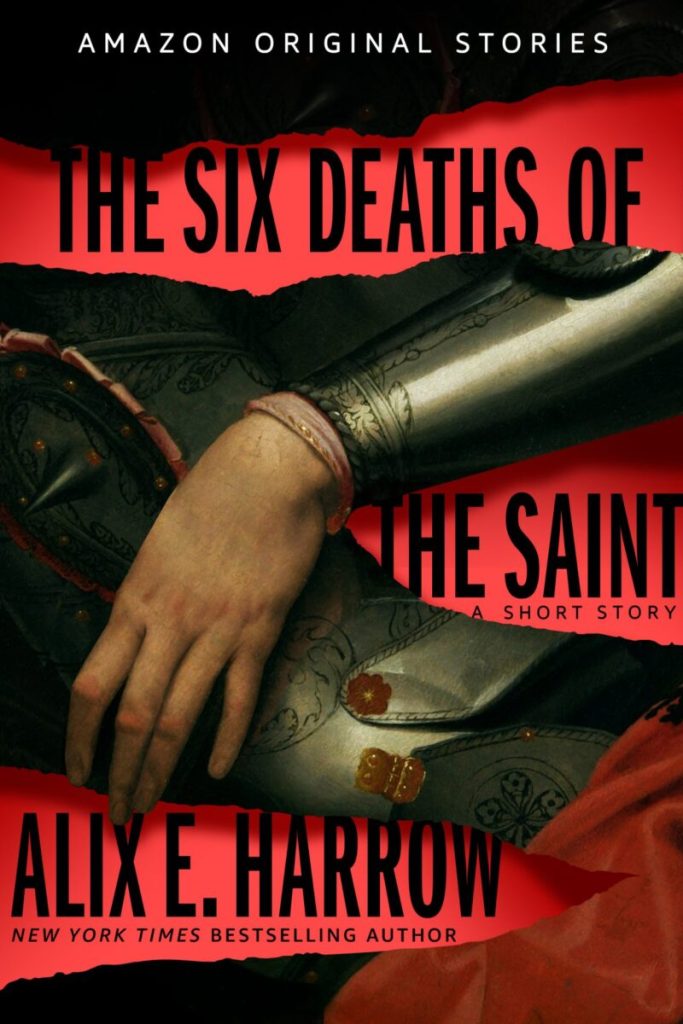
The Six Deaths of the Saint
Alix E Harrow

A copy paste ! :There are several stories available for free download if you are already subscribed to amazon prime, and I took advantage of that recently and thought I’d spend November telling you about the short stories and novellas I picked up that I liked best and thought was worth the read.

These tend to be stories commissioned by Amazon and put into collections by Amazon

Okay, back to review:

*Vomit, scream, fall over in vomit*
It’s perfect.
Professional start, no?

I absolutely adored this story. It checked every mark for me: time travel, time loop, deal with the devil, character development by progressing through trauma, sacrifice motif, clear evil, unclear anachronistic time period. The tone and voice of the story was so clear and strong immediately, the narrative wasting no time to establish the character outside of anything other than a force to be reckoned with through the motif of willpower.
I have recommended this short story to so many people at this point that even at 29 pages I’m willing to offer it up as one of my contenders for my favorite book I’ve read this year.
It is beautiful, the wording and flow of sentences purposeful and well sculpted.
No notes.

Review: The Pram

The Pram
By Joe Hill


There are several stories available for free download if you are already subscribed to amazon prime, and I took advantage of that recently and thought I’d spend November telling you about the short stories and novellas I picked up that I liked best and thought was worth the read.

These tend to be stories commissioned by Amazon and put into collections by Amazon

The Pram is a short story about miscarriage and grief, particularly the grief of the protagonist Willy who feels overshadowed and pressured to resolve grief for his wife Marianne, only to realize he hasn’t resolved anything for himself.

I thought it was an honest treatment of a difficult topic, one I’ve dealt with personally and which I normally immediately stop reading once child or fetus death is involved.

At 57 pages, it’s a quick read and satisfying as a horror short story. Too often horror short stories are so focused on the twist that they fail to embrace the heart of their topic, particularly when they’re commissioned short stories on demand.

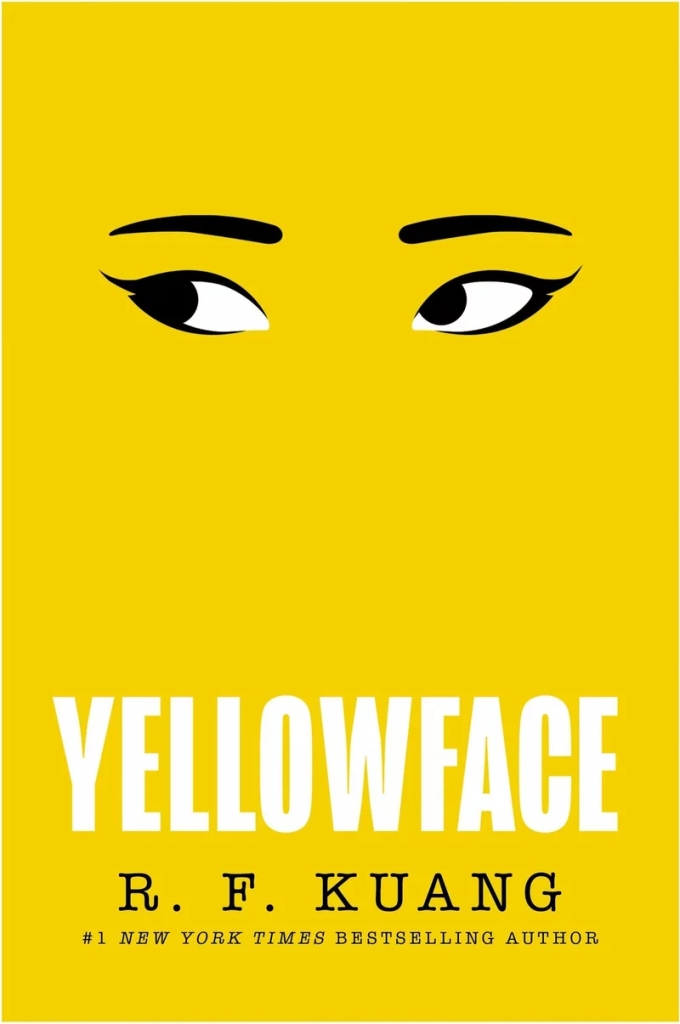
Review: Yellowface

I was thinking about what I could do for my last review of the spooky season and I thought “Did I talk about ‘Yellowface’ yet?” I went back and checked. I haven’t. I need to.

Yellowface by RF Kuang is not billed as a horror story exactly.

It is horror, I would argue. The ‘satirical novel’ (read:horror) takes a deep dive into the publishing industry, white privilege, racism, the persecution complex of white authors, the dismissive attitudes toward Asian voices, the tokenism and more in a way that is so educational, so detailed, as to be exhaustive.

It follows a white woman who, deeply jealous and entitled, steals her successful Asian friend’s manuscript after her death and publishes it. It examines the lengths to which this white woman goes, publishing under a misleadingly Asian sounding name, claiming that anyone can write any topic with her own touch of persecution, justifying her theft by claiming her research into being able to edit the novel makes her an expert, having a sensitivity reader fired, dealing with the deceased’s family and friends, destroying evidence, and turning up in Asian cultural centers trying to promote “her” writing.

As it all unravels, the novel is full of suspense and agitation. And I just have to say….have you ever read a novel and thought, ‘The author thinks about this all of the time.’ Not ‘the author thinks about this all of the time because obviously she wrote a book about it’ but ‘the author has had this fear and idea curling in the back of her skull for at least a decade, and it is a privilege I have not to have thought about it’? That’s the tone of Yellowface.

Never Whistle At Night

As always when I read any collection of short stories there are particular ones which catch my attention, but I really can’t stress how much I enjoyed ‘Never Whistle at Night’. The collection is extremely well put together, spanning a variety of topics impacting indigenous communities, whether that be indigenous folk lore inspired, inspired by racism, classism, internalized trauma, religious trauma, or all of the above and of course more. The cultural weight of each story has its place in the anthology.

The editors deserve all the credit in the world, it’s a wonderful collection. Please support them.

Mexican GothicSilver Nitrate by Silvia Moreno-Garcia


Goooooood Saturday to you. You’re getting two for the price of one today.

Continuing my ‘October is Spooky’, beginning with Mexican Gothic–I picked up this book very specifically because I heard so many literary agents talking about it. Not only socially, but in pitching horror stories a lot of feedback I got was ‘Is it like Mexican Gothic?’

People love this book and I am a convert.

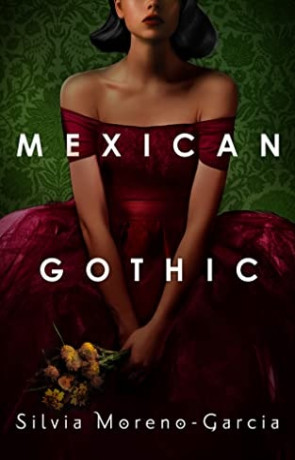
Mexican Gothic
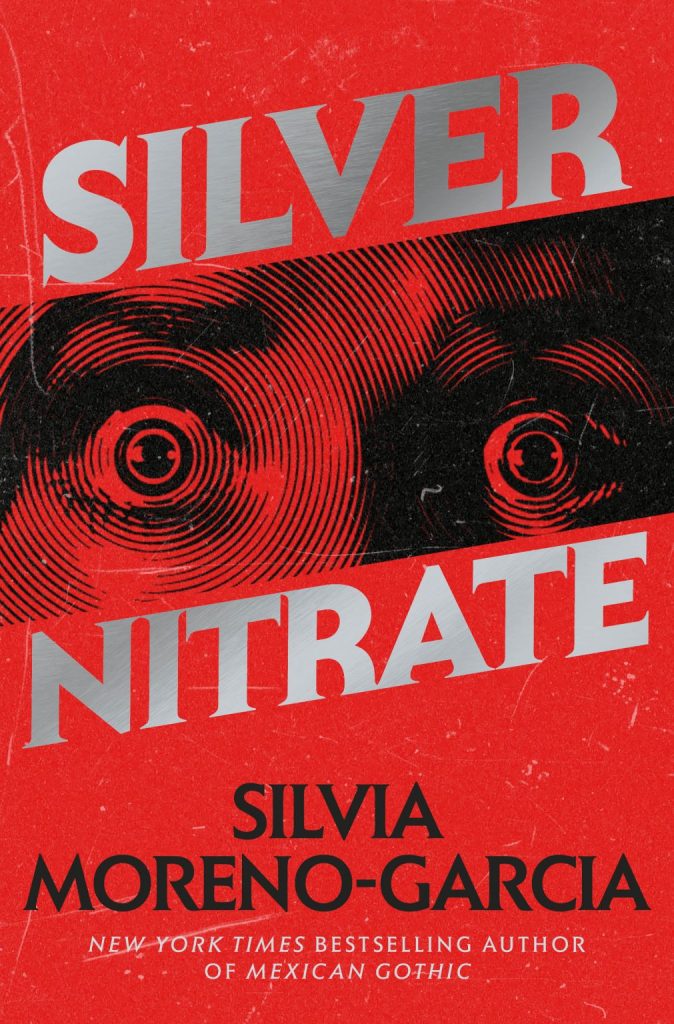
Silver Nitrate by Silvia Moreno-Garcia

Goooooood Saturday to you. You’re getting two for the price of one today.

Continuing my ‘October is Spooky’, beginning with Mexican Gothic–I picked up this book very specifically because I heard so many literary agents talking about it. Not only socially, but in pitching horror stories a lot of feedback I got was ‘Is it like Mexican Gothic?’

People love this book and I am a convert.

Moreno does an amazing job of creating a landscape and atmosphere very similar to many early black and white horror films; I’ve heard her tone directly compared to Del Toro and this novel specifically to Crimson Peak, though very clearly Moreno knows her stuff about the old film industry that inspired Del Toro (more on that in a bit).

Mexican Gothic is so reminiscent of Bride of Frankenstein for me, and I’d honestly hate to spoil anything about the turn in plot where it takes on to become a more modern horror, just please read it.

I came off of the high of Mexican Gothic wanting more Silvia Moreno-Garcia. I even did that thing where I reread specific passages because I liked the wording that much.

Seriously. Read Mexican Gothic.

Luckily, it was right around debut time for Silver Nitrate.

My first take away beginning Silver Nitrate is the care and treatment of old horror films; Moreno Gracia clearly knows not only through her own research but anecdotally a great deal about the golden age of horror. I related, for better or worse, to Montserrat as a character and that compelled me through the book. The examination of the occult in the early 1930s and the impact of different esoteric movements on world culture hit every mark for me. I appreciated the focus, as always, on Mexican culture and Mexican film, reclaiming something that so often is defaulted to American.

It was an excellent book, I’d recommend you to read it and to look out for her other work.

Camp Damascus

It’s October! I should do some spooky books.

Starting the month with Dr Chuck Tingle, Camp Damascus is hands down one of the best books I have read this year. A quick read under 300 pages, it is one of these most effective horror stories I have read in ages. Centered around religious trauma and homophobia, the action begins almost immediately, with no ‘wait till the third act’ nonsense. Shit hits the fan, and hard, and keeps coming. Dr Tingle takes no time to bullshit around with building suspense, the true horror comes from the nonchalant reactions and denials of the clear horrors occuring.
The main character’s neurodivergence was written so naturally and well, it was a wonderfully refreshing representation that I didn’t realize I had been craving.
Easily one of my favorite books of the year, I absolutely encourage you to read it, I am so excited for his next book that I know is in editing stages.

Prove love 💕

Review: Bringing Home the Dharma

Jack Kornfield is someone I’ve known about for over a decade, which is a sentence that makes me feel very old. Mindfulness is something I’ve studied a lot, academically and personally, and I think Bringing Home the Dharma is possibly the most comprehensive collection of answered questions for western Buddhism that I’ve come across. I listened to it as an audiobook and took my time to chew through it, and I truly think it was remarkable.


It may be a bit of an undertaking for someone casually trying to learn about Buddhism because the book is very detailed but for a beginner or someone like me who phases in and out of the scene, it is an excellent resource. Kornfield is, as always, a very gentle but assertive teacher.

I’d definitely prefer having a written copy to the audiobook I listened to because it’s such a great resource; it’s definitely something to reference back to and to cherry pick which areas resonate most.

Review: A Primate’s Memoir


Earlier I reviewed Why Don’t Zebra’s Get Ulcers by Robert Sapolsky as a part of my mental health month and I already have Behave sitting in my pile; Robert Sapolsky, either through listened to lectures or his books, has been a subject I’ve no doubt my friends are getting tired of hearing about.


A Primate’s Memoir, however, is not the same breed of popular science book as Sapolsky’s other work, but rather a straightforward memoir about his experiences as a field researcher in Africa.


Sapolsky details his twenty-plus years living with a troop of baboons, their culture, and the conflicts in the scientific community of speaking about animal culture in human terms. He also details cultural shocks living among and interacting with different tribes and in different African countries and often his own fumbling unpreparedness as he adapts (including a notable horrifying first experience with tamarind).


The memoir includes harrowing stories of being taken captive, having guns held to his head, being mistaken for a mercenary, and in general the sort of adventures that come to a certain breed of guyâ„¢ with an irreverence and compelling story telling style.


He’s the sort of unassuming person that the vanilla masses probably believe just sits in a lab and wouldn’t expect to have spent a time traveling with a caravan of Somalis plundering locals, and yet.


The book is a compelling, engaging, very intelligently and thoughtfully written account. Sapolsky brings an honesty and no-bullshit narrative voice to his time in Africa while offering the perspective that he is just one researcher who has dealt with corruption, with cultural shocks, with various international blocks and that there is so much more to field research and medicine than most people realize.

Review: Honeycomb by Joanne M Harris

I’ve been sitting on writing this review because I’m not sure how I want to structure it. Structure is fundamental to Honeycomb by Joanne Harris and this is my second contender for my favorite book that I’ve read in 2023.

In fact, the reliance on bees within the story is, I’m sure, a direct reference to the importance of structure to the novel.

I want to be assured that I do it justice.

Honeycomb is presented as a series of short chapters introducing interlocking stories and continuations of earlier chapters and characters, chiefly following The Lacewing King. Characters are, importantly, not named but given honorifics as the book utilizes traditional fae myths. As a person with ….an unkindly level of entomophobia, you’d think that this book would be near impossible for me to read as the many factions and clans of fae are all based on different insect species. However, I persevered and I actually really enjoyed the way the insects and the affectations of each fae were discussed.

Anyone who may remember the horrific katydid incident last year where I blew up discord channels and texts demanding to know how I got rid of the beast that had flown into my window (it took me four hours to work up the nerve to trap him between the screen and sliding glass door) should be very proud of me!

Not only did I push through, but this book has stuck with me incredibly. I love the very arch yet traditional approach to fae stories. It was nostalgic, reminiscent of reading collected fairy tales and brother’s Grimm compilations, but with an interconnecting thread that built and drove you deeper into the world that Ms. Harris was creating. It had an atmosphere similar to Susanna Clarke’s fae. The characterization both holds you at a distance as a reader and is engrossing, drawing you in to learn more about the various flawed characters and is reminiscent of old school fantasy like George MacDonald.

I recommend it highly.


Review: Norm Macdonald: Based on a True Story

Woof.


Now that probably doesn’t seem like a great opener, but I do find myself with things to say both good and bad. Woof is mostly an exclamation related to some sort of exasperation or tension and release, and that’s what a humor book should be. Tension and release.


I don’t know I’d recommend this book to just anyone. Or rather, I would recommend it if I knew you well enough and I knew that you knew what was what.


Humor books aren’t for just everybody.


You’ve got to appreciate the craft and look past some of the murk. Some people can’t, and that’s okay. Some people are offended, and that’s okay. You have a right to be. Some of the offensive bits just aren’t funny, and using ‘funny’ to deflect culpability is a real problem.

Humor is built on tension and release, if the release doesn’t land then it’s not funny.


So here’s what’s important for you to hear: Norm Macdonald was a good writer. Norm Macdonald was someone skilled with words and inflection and story telling. He set word after word with an ease in an inevitable domino. Norm Macdonald was also someone who liked to take the piss and pull the rug out at the last minute, so as to skewer whatever sentimental turn he might have accidentally taken, instead assuring himself of maintaining his tone and humor and not tumbling accidentally into vulnerability.


That’s not an insult. He was a damn good writer, he knew what he was doing, and he did it. Unapologetically in most cases.


There are occasional themes in his humor that I can’t get behind–which is why if I was gonna recommend this book I’d want it to be to people who I knew knew what was to be known, as it were. There’s mentioned transphobia (which he apologized for in his comedy later in life), a few feckless mentions of rape, suicide, over the top misogyny, all intended to be humor —but the fear is how people take it; either as endorsement or insult. Satire is all risk if people can co-opt it.


The narrative takes this arc that begins very strong and then leans hard into revisiting old bits and Norm Macdonald characters from SNL. If you weren’t familiar with Norm Macdonald already you could say: my god, what risky and original content. Unfortunately if you know who Norm Macdonald is, and you probably do if you read this book, you probably have heard a lot of these jokes before. They’re given some new life and framing, I even liked the bit where the book is randomly interrupted by a suffering ghost writer who inserts his own thoughts (hatred) about Norm Macdonald.


I would have loved, fucking loved, to have read a completely original Norm Macdonald novel. The first few chapters in which he describes his fictional childhood are absolutely beautiful. They’re compelling, well written, full of Mark Twain-esque charms and then Norm Macdonald gut punches. It’s a bit, of course, but it also shows a skill with words and narrative framing that honestly I would have been happy to see extended into a whole damn book if not several. But then the rehashed bits come in, and the SNL characters, and you wish someone had sat the man down and said, ‘Look, you don’t have to rely on that.’

That’s condescending. Yeah, well.

What I’m saying is: the original content is amazing and you’re left feeling you only ever scratched the surface of how talented he was.


The book is strong for the things Norm Macdonald’s comedy was strong for: careful word choice, narrative framing, and clever turns. It’s also weak for the things Norm Macdonald’s comedy was weak for: punching down, no matter how good naturedly, and leaning into his want to be one of the boys.


I can’t tell you, honest, how much I liked those opening, original chapters. How I laughed at them, screenshot things to friends, and actually cared about the characters he’d made up to populate his childhood.


I also loved that you can see just what he’s doing: he’s telling you outright, you aren’t going to get to see the real me, fuckers.


Norm Macdonald, who I’m led to believe cut a quiet figure in life, and apparently didn’t drive despite living in LA, creates a purposely overly misogynistic character, detached from reality, shamelessly plotting to either fuck the world or take his own life. The character Norm chronically wears his own merch, at one point handling a man recognizing him by pointing at hat, shirt, etc., as the man says ‘what do I know you from?’ He pokes fun at his gambling addiction by taking the joke to its extreme, he overstates everything.


The book is in many ways overlapping framing devices, which Macdonald was the master of, sandwiching bits.


Particularly I’m fond of his sure fire answering machine bit which he repeatedly touts as being the best joke he’s ever written, and each time it’s told it never lands. He presents it again and again, straight faced, in new situations; pulling out his guaranteed winner, to stunning failure. His faith to the bit never wavers.


That might be this book in a sentence.

After he passed, I had heard an anecdote that I hope and kind of bet was true. It seems like it must be true because there’s no punchline and if Norm or one of his ilk had come up with it, he’d have pulled out the rug before it got too sentimental.

He was getting heckled and rather than clap back, the way we praise a comedian for being able to do, he paused his routine and asked the man if he’d be willing to meet with him after the show. After the show the man sort of sheepishly came back stage and Norm asked him what was going on with him and if he was all right. The man ended up breaking down crying and Norm Macdonald took him out to dinner. They spent the night bullshitting and Norm left him better off.

Every story I’ve heard about the man on his own, quiet and not seeking attention, is about something kind he did.

If you like his comedy, you’ll like the book; it’s like an in-club, a well tested group of inside jokes among a global mass of friends. I have a friend who when I said I was reading it kept saying ‘Oh, Norm’ in the same way we talk about one of our own friends who has passed.

If you don’t like his comedy, or the group of comedians he buzzed around and tried to keep the approval of, you might not like it. That’s totally fine, there’s shit not to like.

I just sort of hope he knew how good a writer he was.