Tag: dude

Review: The Pram

The Pram
By Joe Hill


There are several stories available for free download if you are already subscribed to amazon prime, and I took advantage of that recently and thought I’d spend November telling you about the short stories and novellas I picked up that I liked best and thought was worth the read.

These tend to be stories commissioned by Amazon and put into collections by Amazon

The Pram is a short story about miscarriage and grief, particularly the grief of the protagonist Willy who feels overshadowed and pressured to resolve grief for his wife Marianne, only to realize he hasn’t resolved anything for himself.

I thought it was an honest treatment of a difficult topic, one I’ve dealt with personally and which I normally immediately stop reading once child or fetus death is involved.

At 57 pages, it’s a quick read and satisfying as a horror short story. Too often horror short stories are so focused on the twist that they fail to embrace the heart of their topic, particularly when they’re commissioned short stories on demand.

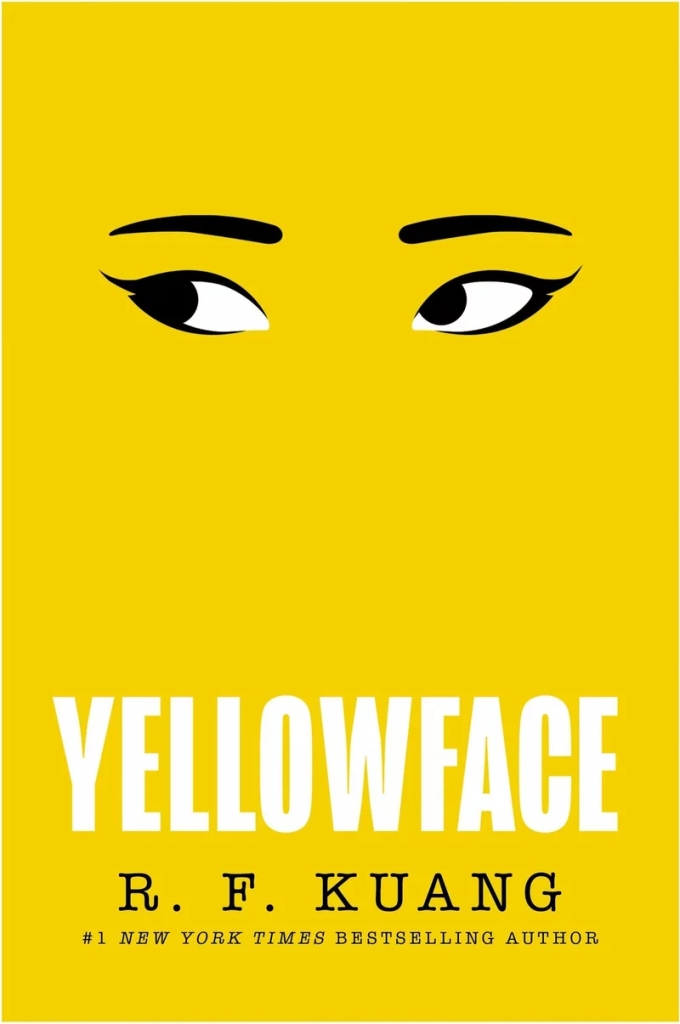
Review: Yellowface

I was thinking about what I could do for my last review of the spooky season and I thought “Did I talk about ‘Yellowface’ yet?” I went back and checked. I haven’t. I need to.

Yellowface by RF Kuang is not billed as a horror story exactly.

It is horror, I would argue. The ‘satirical novel’ (read:horror) takes a deep dive into the publishing industry, white privilege, racism, the persecution complex of white authors, the dismissive attitudes toward Asian voices, the tokenism and more in a way that is so educational, so detailed, as to be exhaustive.

It follows a white woman who, deeply jealous and entitled, steals her successful Asian friend’s manuscript after her death and publishes it. It examines the lengths to which this white woman goes, publishing under a misleadingly Asian sounding name, claiming that anyone can write any topic with her own touch of persecution, justifying her theft by claiming her research into being able to edit the novel makes her an expert, having a sensitivity reader fired, dealing with the deceased’s family and friends, destroying evidence, and turning up in Asian cultural centers trying to promote “her” writing.

As it all unravels, the novel is full of suspense and agitation. And I just have to say….have you ever read a novel and thought, ‘The author thinks about this all of the time.’ Not ‘the author thinks about this all of the time because obviously she wrote a book about it’ but ‘the author has had this fear and idea curling in the back of her skull for at least a decade, and it is a privilege I have not to have thought about it’? That’s the tone of Yellowface.

Never Whistle At Night

As always when I read any collection of short stories there are particular ones which catch my attention, but I really can’t stress how much I enjoyed ‘Never Whistle at Night’. The collection is extremely well put together, spanning a variety of topics impacting indigenous communities, whether that be indigenous folk lore inspired, inspired by racism, classism, internalized trauma, religious trauma, or all of the above and of course more. The cultural weight of each story has its place in the anthology.

The editors deserve all the credit in the world, it’s a wonderful collection. Please support them.

Mexican GothicSilver Nitrate by Silvia Moreno-Garcia


Goooooood Saturday to you. You’re getting two for the price of one today.

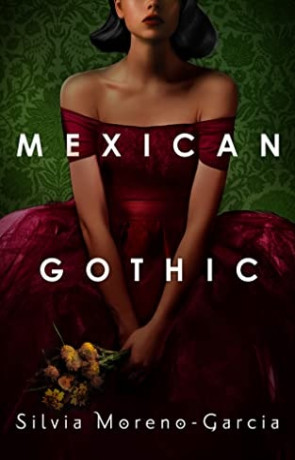
Continuing my ‘October is Spooky’, beginning with Mexican Gothic–I picked up this book very specifically because I heard so many literary agents talking about it. Not only socially, but in pitching horror stories a lot of feedback I got was ‘Is it like Mexican Gothic?’

People love this book and I am a convert.

Mexican Gothic
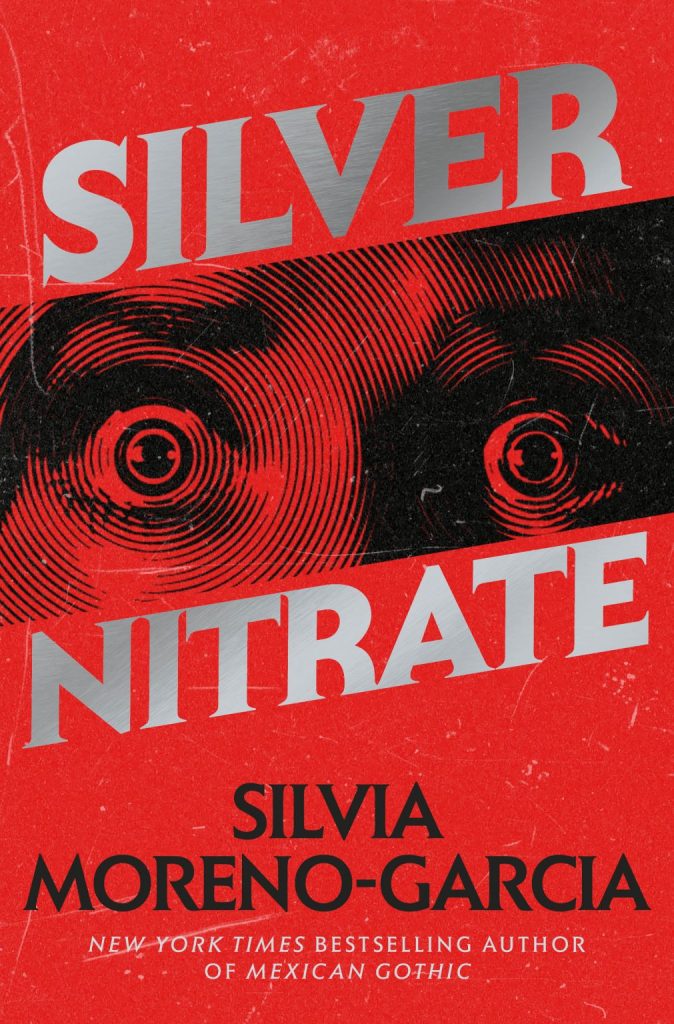
Silver Nitrate by Silvia Moreno-Garcia

Goooooood Saturday to you. You’re getting two for the price of one today.

Continuing my ‘October is Spooky’, beginning with Mexican Gothic–I picked up this book very specifically because I heard so many literary agents talking about it. Not only socially, but in pitching horror stories a lot of feedback I got was ‘Is it like Mexican Gothic?’

People love this book and I am a convert.

Moreno does an amazing job of creating a landscape and atmosphere very similar to many early black and white horror films; I’ve heard her tone directly compared to Del Toro and this novel specifically to Crimson Peak, though very clearly Moreno knows her stuff about the old film industry that inspired Del Toro (more on that in a bit).

Mexican Gothic is so reminiscent of Bride of Frankenstein for me, and I’d honestly hate to spoil anything about the turn in plot where it takes on to become a more modern horror, just please read it.

I came off of the high of Mexican Gothic wanting more Silvia Moreno-Garcia. I even did that thing where I reread specific passages because I liked the wording that much.

Seriously. Read Mexican Gothic.

Luckily, it was right around debut time for Silver Nitrate.

My first take away beginning Silver Nitrate is the care and treatment of old horror films; Moreno Gracia clearly knows not only through her own research but anecdotally a great deal about the golden age of horror. I related, for better or worse, to Montserrat as a character and that compelled me through the book. The examination of the occult in the early 1930s and the impact of different esoteric movements on world culture hit every mark for me. I appreciated the focus, as always, on Mexican culture and Mexican film, reclaiming something that so often is defaulted to American.

It was an excellent book, I’d recommend you to read it and to look out for her other work.

Camp Damascus

It’s October! I should do some spooky books.

Starting the month with Dr Chuck Tingle, Camp Damascus is hands down one of the best books I have read this year. A quick read under 300 pages, it is one of these most effective horror stories I have read in ages. Centered around religious trauma and homophobia, the action begins almost immediately, with no ‘wait till the third act’ nonsense. Shit hits the fan, and hard, and keeps coming. Dr Tingle takes no time to bullshit around with building suspense, the true horror comes from the nonchalant reactions and denials of the clear horrors occuring.
The main character’s neurodivergence was written so naturally and well, it was a wonderfully refreshing representation that I didn’t realize I had been craving.
Easily one of my favorite books of the year, I absolutely encourage you to read it, I am so excited for his next book that I know is in editing stages.

Prove love 💕

Review: Poison for Breakfast


I would call it atmospheric.

The atmosphere is both circular logic and literary nonsense, in the tradition of Lewis Carroll’s nonsense and not the dismissive way which we say ‘nonsense’ casually.
Poison for Breakfast is not a novel. It’s a meditation on the nature of storytelling in the guise of a story.


Sort of, kind of, ‘Poison for Breakfast’ is about consuming poison and trying to work backwards to figure out how you’d gotten to the point of being poisoned. Snicket is given a note informing him that he has been poisoned and now he, as a reliably known mystery solver, must solve the mystery of this suddenly appeared note, his poisoning, and therefore his apparent murder.


He doesn’t actually tell you very much at all, buried in convoluted Lemony Snicket-ism upon Lemony Snicket-ism, meditating on the nature of storytelling. He tells various non sequiturs that he initially frames as action then admits are really just things he’s thinking about but that probably did occur at some point and therefore are still true.


Handler, as Snicket of course, talks about the nature of story structure, the importance of inspiring bewilderment, what details are and are not important to include, and the need to cause the reader to buy in to the side of the narrator. At one juncture he tells a story of a bad lesson given by an ornery writer which sounded remarkably familiar and which I paused in reading and laughed…. because I read that book this year.


Handler, as Snicket, talks about the evolution of writing advice as well, his ideas of the rules of writing changing in real time as he discusses Lemony Snicket moving about his fictional morning uncovering his potential imminent death and therefore murder.


He also very, very carefully discusses various ways to make eggs—a nod, I’d say, to the rule Lemony Snicket gives that you should only tell information relevant to the story. Handler, as Snicket, tells you many, many irrelevant things in the course of telling you the story, the story where he may presumably die at the end, without sharing other necessary information.


The true theme appears to be rules and breaking them.
Like cracking many eggs.


It is also a meditation on safety. The way in which safety can be so suddenly and irreversibly taken out from under us, “we have poisoned ourselves”.


We read to identify with bewilderment, explore our bewilderment, and we throw ourselves into imagination to find solutions to our bewilderment.


I encourage you to read this short, under 200 pages, meta narrative disguised writing advice. Slowly.


It’s in many ways life advice, too.

Review: Sunnyside, Glen David Gold

My friend who doesn’t know me, Glen David Gold, was someone whose books were recommended to me by a friend who has since passed. I had avoided them at first, as I mentioned in my review last year of Carter Beats the Devil. My friend had been right, of course, knowing me well enough, that I feel strongly about these novels.

I loved Carter Beats the Devil, I adored Sunnyside.

Sunnyside, Gold’s second novel, is an examination of so many things: old Hollywood, war, masculinity in relationships, parental relationships, neglect and control. It honestly took me quite a while to grapple with it, not being a page burner so much as a book that requires breaks and contemplation. The way which the different story lines, the completely unrelated characters, weave together is ingenious. An intelligent, winding story with many fantastical elements, stories of old west shows woven into the plot involving Weimar Germany, the fundraising of old Hollywood for war bonds, and heavily leaning on the life and stories of an animated, well characterized Charlie Chaplin as the divining rod for the plot. Normally I’m skittish about historical fiction that leans on well known historical figures—I just have this sort of cringe reaction, wondering how a person would feel having words put in their mouth. With Glen David Gold I consistently don’t mind, I don’t think of it at all. That is Chaplin.

And while Chaplin is a focus and draw, of course, I think my favorite character was Lee Duncan. He was such a smooth, bumbling at times, sympathetic leading man for Gold to lean on.

I cannot begin to fathom the research process for a book like this. It’s stellar.

Review: Insomniac City

Bill Hayes, a memoirist and photographer based in New York City, writes a charming love story to the city and details the loss of romantic partners bookending his initial move to New York and his new life as an established New Yorker.

Famously, Bill Hayes was the partner of the now passed Dr Oliver Sacks and in this book Hayes discusses leaving Los Angeles after the sudden death of an earlier long term partner to a premature heart attack, only to be swept up into a romance with Dr Sacks, their relationship and its age defying and cultural defying nature as Sack’s had been a closeted man. It then details Sack’s cancer and eventual death.

The whole relationship is documented lovingly and sweetly. Something which I lingered on in the telling was the care that Hayes put into not being bitter. Having suffered the loss of two romantic partners, his memoir beginning and ending with loss, it would be easy to see someone fall into despair. Hayes, admirably, writes from a place of love and acceptance.

What first convinced me to read the book was the description of loss in the very beginning chapters, as Hayes details the loss of his partner, Steve—-Of seeking connection and sense in a sudden, unbearable moment. Hayes struck a chord with me early on regarding the nature of grief, yet his optimism, his ability to love again and demonstrate loving again, made this a remarkably wholesome, heartfelt read.

Review: The Ladies of Grace Adieu

This book was a bit of a struggle for me, admittedly, because while I adore Susanna Clarke and the tone, atmosphere, and world that she’s created, it was frankly strange to get accustomed to her in a short story format after Jonathan Strange and Mr. Norrell.

I found myself half way through the book before I struck on my favorite story of the lot, “Mr Simonelli or the Fairy Widower”. 

Prior to that it felt like I was floundering a bit looking for the punchline at the end of each story. “Ah, Rumpelstiltskin”, for example.

But the stories about fae folk are where I think Susanna Clarke really makes her name and sets the flag. She’s rekindled for me, a person who loves deals with the devil, just how devilish and dealing fae can be.

The stories after this midway mark all bear the same tone and quickness I expected of Susanna Clarke from Jonathan Strange and Mr. Norrell, down to the copious footnotes in “Tom Brightwind”. I worry I wouldn’t have stuck with the book if not for “The Ladies of Grace Adieu” themselves, the first story of the collection, which had all the snark and turn I like of her style.

Now I’m a bit struck at a loss because I’ve run out of Susanna Clarke to read. There’s a surrealist aspect to some of these stories that had me thinking of what it would be like if Samuel Beckett was writing fantasy. I already miss it. The atmosphere is hard to capture as effectively as Clarke consistently does.

I almost immediately passed off my thrifted copy to a friend; I need these stories still circulating.

Review: The Undertaking of Hart and Mercy by Megan Bannen

I was in a rut and in a mood for fluff. Something vaguely romantic or funny. The book seemed to appear of its own idea and I liked the cover. Sometimes that’s all it takes. I think people are far too dismissive of the importance of good cover art.

As to the charge of needing to be vaguely romantic or funny; this book delivers. It was quick paced, very sweet, and I liked it.  The dialogue at times took me out of it because it was too much friend-speak or jokey and not what I expected in a fantasy-romance. That is a compliment. This book delightfully doesn’t take itself too seriously.

The trope of enemies to lovers through an anonymous letter mechanic is hardly novel, but the romance is heated, the itch scratched.

What’s memorable for me for this book, however, isn’t the romance aspect. It was the fantasy.

The world building, which the reader is thrown into rather than sermonized at, was well paced, well thought, well devised. I would be happy to learn more about this fantasy world, the gods and creatures, and found myself finding the book all too short. I really enjoyed the aspects of fantasy which were neither overdone or underdone but meted out as necessary to the romance. It’s a very character driven story.

(If I’m speaking in an odd cadence, blame Susanna Clarke. She’s next week’s review.)

I really, really liked this book. I quickly recommended it to a friend. Sometimes the pursuit of fluff is perfectly admirable. Not every book need be dark or poignant, which isn’t to say this book lacks poignancy. But rather, it’s fun. I found myself doing that all too satisfying thing of skipping back and forth to passages I had liked or that had stuck in my head for one reason or another, which I always mark as a sign of a great writer.