Tag: horror

Never Whistle At Night

As always when I read any collection of short stories there are particular ones which catch my attention, but I really can’t stress how much I enjoyed ‘Never Whistle at Night’. The collection is extremely well put together, spanning a variety of topics impacting indigenous communities, whether that be indigenous folk lore inspired, inspired by racism, classism, internalized trauma, religious trauma, or all of the above and of course more. The cultural weight of each story has its place in the anthology.

The editors deserve all the credit in the world, it’s a wonderful collection. Please support them.

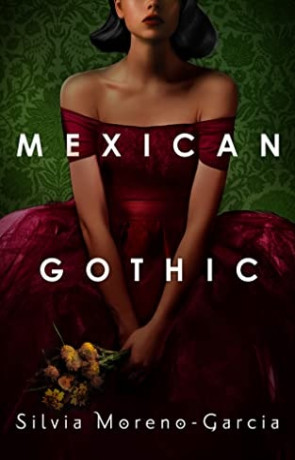
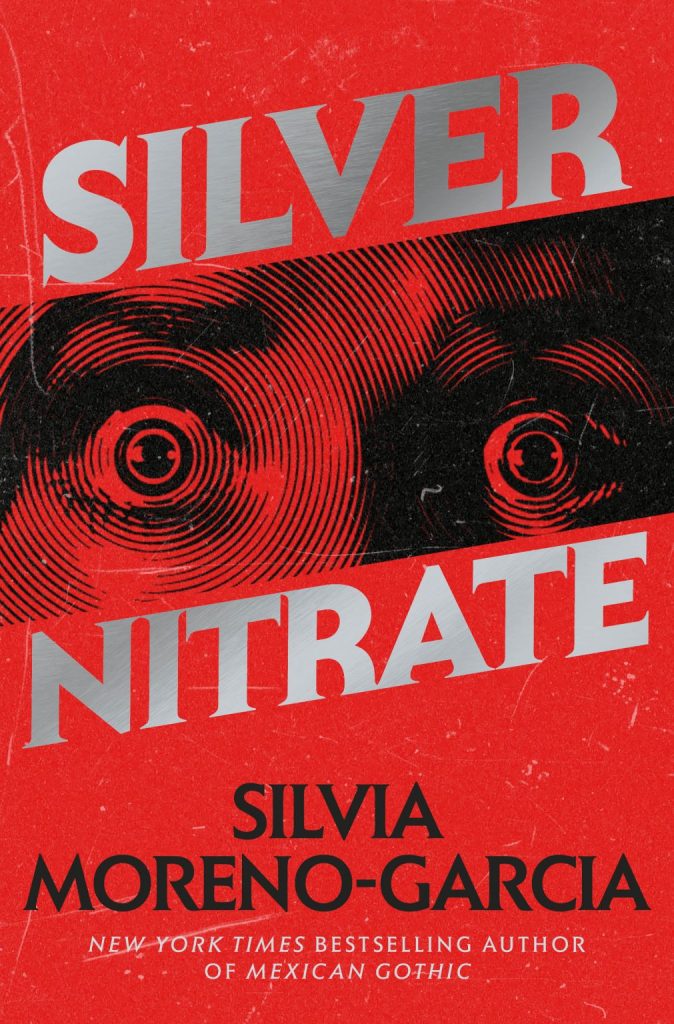
Mexican GothicSilver Nitrate by Silvia Moreno-Garcia


Goooooood Saturday to you. You’re getting two for the price of one today.

Continuing my ‘October is Spooky’, beginning with Mexican Gothic–I picked up this book very specifically because I heard so many literary agents talking about it. Not only socially, but in pitching horror stories a lot of feedback I got was ‘Is it like Mexican Gothic?’

People love this book and I am a convert.

Mexican Gothic
Silver Nitrate by Silvia Moreno-Garcia

Goooooood Saturday to you. You’re getting two for the price of one today.

Continuing my ‘October is Spooky’, beginning with Mexican Gothic–I picked up this book very specifically because I heard so many literary agents talking about it. Not only socially, but in pitching horror stories a lot of feedback I got was ‘Is it like Mexican Gothic?’

People love this book and I am a convert.

Moreno does an amazing job of creating a landscape and atmosphere very similar to many early black and white horror films; I’ve heard her tone directly compared to Del Toro and this novel specifically to Crimson Peak, though very clearly Moreno knows her stuff about the old film industry that inspired Del Toro (more on that in a bit).

Mexican Gothic is so reminiscent of Bride of Frankenstein for me, and I’d honestly hate to spoil anything about the turn in plot where it takes on to become a more modern horror, just please read it.

I came off of the high of Mexican Gothic wanting more Silvia Moreno-Garcia. I even did that thing where I reread specific passages because I liked the wording that much.

Seriously. Read Mexican Gothic.

Luckily, it was right around debut time for Silver Nitrate.

My first take away beginning Silver Nitrate is the care and treatment of old horror films; Moreno Gracia clearly knows not only through her own research but anecdotally a great deal about the golden age of horror. I related, for better or worse, to Montserrat as a character and that compelled me through the book. The examination of the occult in the early 1930s and the impact of different esoteric movements on world culture hit every mark for me. I appreciated the focus, as always, on Mexican culture and Mexican film, reclaiming something that so often is defaulted to American.

It was an excellent book, I’d recommend you to read it and to look out for her other work.

Camp Damascus

It’s October! I should do some spooky books.

Starting the month with Dr Chuck Tingle, Camp Damascus is hands down one of the best books I have read this year. A quick read under 300 pages, it is one of these most effective horror stories I have read in ages. Centered around religious trauma and homophobia, the action begins almost immediately, with no ‘wait till the third act’ nonsense. Shit hits the fan, and hard, and keeps coming. Dr Tingle takes no time to bullshit around with building suspense, the true horror comes from the nonchalant reactions and denials of the clear horrors occuring.
The main character’s neurodivergence was written so naturally and well, it was a wonderfully refreshing representation that I didn’t realize I had been craving.
Easily one of my favorite books of the year, I absolutely encourage you to read it, I am so excited for his next book that I know is in editing stages.

Prove love 💕

Edgar Allan Poe was a feminist,

Among the many reasons to love him.

Hello, it’s another theme month. This month I’ve decided to hook my claws into a different author each week, beginning as I ought with dear Edgar.

A million years ago now when I was in middle school I did a project on Edgar Allan Poe and every time I went to write about him the power went out, computers broke, lightning struck; it all felt very clandestine. I was amused and spooked enough I considered telling my teacher that he didn’t approve.

I recently saw some artwork of Ligeia and decided to reread it, which took me elsewhere with Poe since I’ve always had a thing for him. I wrote a short story ten years ago now which got some movement and consideration where I put a fictional Poe on the day of his death, stumbling about. He had a sad death. I think from time to time I ought to rewrite it.

Speaking of Ligeia, a short story of two dead wives and will power over death, Ligeia is given credit for composing ‘The Conquering Worm’ which has long been one of my favorite poems. 

Poe’s famous for his morbidity, but his greatest contribution to fiction is the detective story. Poe wrote C Auguste Dupin, the first layman applying considerable intellect and imagination to solving crime as a private individual, first appearing in ‘The Murders in the Rue Morgue’. Dupin was a huge inspiration toward later private detectives, namely Sherlock Holmes.

But I called this ‘Edgar Allan Poe was a feminist’ for a reason. Poe wrote repeatedly morbid stories about death, will power over death, and the romanticism of women dying of tuberculosis not because he was someone who fetishized tuberculosis—as was very common at the time—but because he had experienced so much loss of the women in his life. 

Poe was raised by his adoptive family, the Allan’s, after his mother’s death from tuberculosis when he was three years old.

 When Mrs. Allan also contracted tuberculosis and Mr. Allan began overt efforts to remarry before his wife had died, Edgar Poe viciously fought with him for the respect and rights of his foster mother to the point of being disowned and consequential financial ruin.

Poe continued to lose. Often financially in dire conditions, he struggled, joined the military, took various names and aliases. His first sweetheart married another; his wife (and cousin) Virginia Clemm died aged twenty-four after eleven years of marriage (yikes) of …yes , more tuberculosis. Worse yet, Virginia took five years to succumb to the illness, leaving Poe to watch her struggle and wax and wane in health. His optimism and pessimism hinging on Virginia’s well being, much of his writing and fixation on death in fiction mirror descriptions he wrote of Virginia’s illness in letters to friends and family. 

Virginia also was said to resemble many of his female heroines, particularly Ligeia—the much loved wife of the unnamed narrator who possesses the body of the next, less loved wife. Indeed, implying that remarrying would have just been a poor attempt at rekindling feelings that had died with Virginia.

In life, Poe never remarried.

He was known in his lifetime primarily as a critic rather than as a writer, his writing becoming more popular after his death, and he was also known as responsible for several hoaxes. (The Facts in the Case of M Valdemar, a short story about, yep, resisting natural death through mesmerism and willpower, was so convincingly written that many people at the time mistook it for a medical paper, requiring Poe to publicly declare it as a hoax). While known for the horror it’s encased in, a prevailing theme of his work, outside of death itself, was the reverence he had had for the women he’d lost.Â